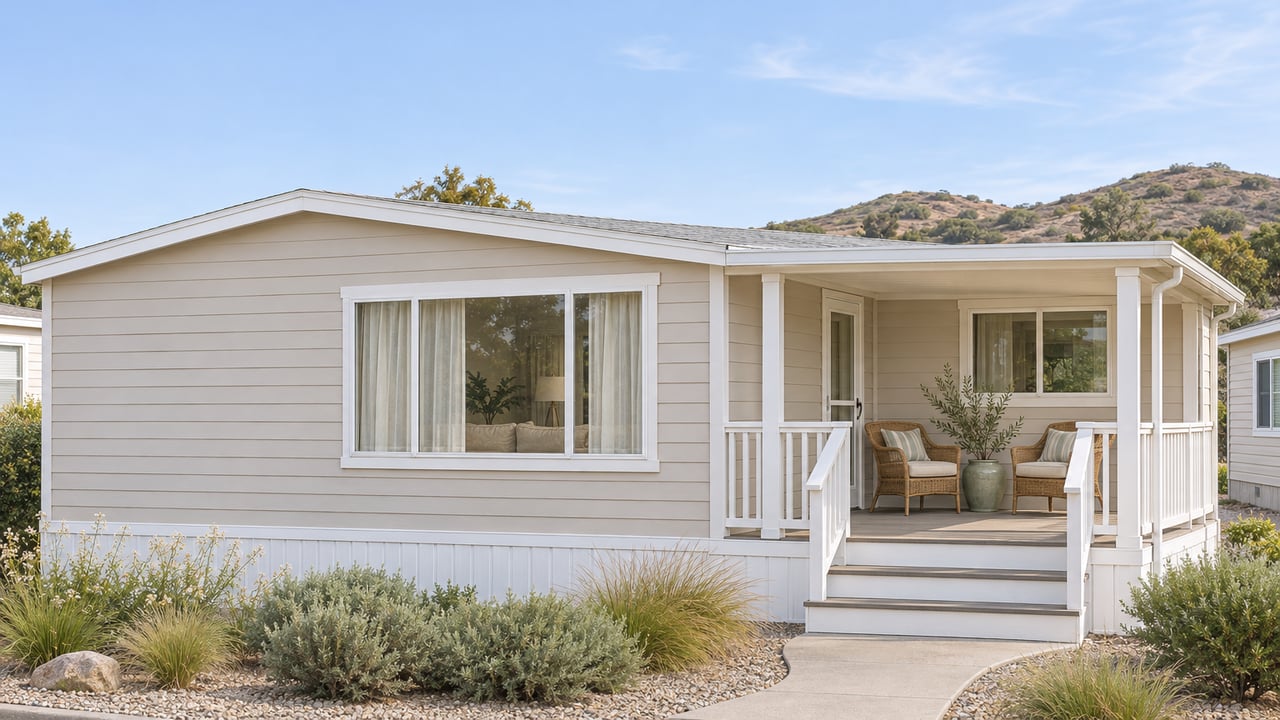
"No one with a straight face can argue that these people aren't getting an incredible housing bargain." The park owner's attorney said that at a San Juan Capistrano City Council hearing in October 2016, as the Orange County Register reported. He was talking about El Nido Mobile Estates on Ortega Highway, a park next to the Hunt Club, where, in his words, homes sell for millions of dollars. In the same story, the residents' attorney said the owner wanted to grab part of a premium allegedly obtained when some residents sell their homes and spaces.
Both attorneys were describing the same thing. In a San Juan Capistrano park, a below-market space rent can pass to the next owner, so it has value, and that value shows up in what the home sells for. Whether you actually keep the discount you paid for depends on the paperwork you sign with the park.
The rental agreement comes before the purchase price
Buying a manufactured home in a park means two transactions. You buy the home from the seller, and you separately agree to rent the space under it from the park. San Juan Capistrano's Mobile Home Rent Control ordinance, Article 9 of the Municipal Code, defines rent as the charge solely for use and occupancy of the space. It does not cover the home itself or amenity charges.
The space agreement is where the friction sits. The ordinance exempts "leasehold agreements," which it defines as leases other than tenancies at will or month-to-month, from its petition and hearing review process. State law has a similar carve-out. The California Department of Housing and Community Development explains that even in a rent control jurisdiction, certain leases are exempt from rent control if they meet set criteria, such as running longer than 12 months, and it refers readers to Civil Code Section 798.17 for the full conditions.
So two buyers could pay the same price for the same home and end up with different rights. One signs a month-to-month agreement covered by the city's rules. The other signs a longer lease that may sit outside them. The price assumed the city's protection carries over, but the lease type decides whether it does.
How the discount travels from seller to buyer
Two parts of the ordinance create the value a seller is pricing.
The first is the annual cap. The maximum allowable increase is tied to the Consumer Price Index for all urban consumers in the Los Angeles-Long Beach-Anaheim area, and a park can raise space rents no more than once in any 12-month period without the City's prior approval. The code bases the increase on the CPI rise for the previous calendar year. For 2026 that means 2025. The Bureau of Labor Statistics' annual average index for the region was 342.676 in 2025, up from 332.194 in 2024, an increase of about 3.2%.
The second part is the one that makes the discount transferable. Under the ordinance, a vacancy, "in either a space within a park or a mobile home unit on a space," cannot raise space rent beyond the once-a-year allowed increase unless the City hears and approves a petition. A sale does not reset the rent to market. The new owner picks up the rent close to where the old owner left it.
When rent cannot reset at sale, the gap between the controlled rent and what the space might otherwise bring becomes something the seller can price into the home. That is the "premium" the residents' attorney described in 2016. For a buyer, it means part of the price is a prepayment for years of lower rent. That only pays off if the rent stays under the ordinance after closing.
What a rent fight at El Nido showed
The cap is enforced through hearings, and San Juan Capistrano has a record of using them. A petition can come from the park owner or from residents representing more than 50% of the inhabited spaces. A Hearing Officer makes recommendations, the Planning Commission reviews them, and the City Council makes the final decision. The Council may affirm, modify or reverse an increase, but it cannot order rent below the maximum allowable increase.
The Orange County Register's coverage of El Nido Mobile Estates, at 27703 Ortega Highway, shows how far apart a request and a ruling can be.
| Year | What the owner sought | What the City Council allowed |
|---|---|---|
| 2015 | $641 per month increase | $37 per month |
| 2016 | $403 per month increase | $4.75 per month, plus a separate $4.75 monthly charge for five years to cover legal and accounting fees |
A city-appointed hearing officer had recommended against the 2015 request before the Council acted. The 2016 vote was 4-0. These rulings are about ten years old and do not describe current rents. They do show how the system works. The ordinance held both times, and that is the protection a buyer pays for when a park home is priced well above what the structure alone might bring.
The local rules have also held up in court. In Gregory v. City of San Juan Capistrano, a 1983 appellate decision in which Rancho Alipaz intervened as a park owner, the court held that the state's Mobilehome Residency Law did not preempt local mobilehome rent control. The court did strike the ordinance's provision giving residents a right of first refusal to buy a park.
The park approves the buyer, on a clock
The second point of friction comes from state law, and it changed this year. Under Civil Code Section 798.74, park management may require prior approval of a buyer whose home will stay in the park. The process runs in a set order:
- The seller or the seller's agent gives the park notice of the sale before closing.
- Within 15 days, management provides its usual approval standards, its minimum credit score, and the list of documents it requires.
- Management may deny approval only for a reasonable concern based on the buyer's prior tenancy history, inability to pay rent, utilities and charges, or fraud, deceit or concealment of material facts.
- Management must decide in writing within 15 business days after receiving all the requested information. If it does not notify both seller and buyer, the buyer is deemed approved.
AB 456, passed in 2025, amended this section, including the deemed-approval rule, and the change took effect January 1, 2026. For an escrow on a San Juan Capistrano park home, park approval and the choice of rental agreement both land in the same short window before closing. The agreement you are handed during that window is the one that settles whether the price you agreed to made sense.
Where this applies in San Juan Capistrano
Orange County's Office on Aging lists three San Juan Capistrano parks: Capistrano Valley Mobile Estates at 26000 Avenida Aeropuerto, El Nido Mobile Estates at 27703 Ortega Highway, and Rancho Alipaz Mobile Home Park at 32371 Alipaz Street. Each park sets its own approval standards and rental agreement forms. That makes these the questions worth asking before you write an offer:
- What space rent is the seller paying now, and when was the last increase?
- Which rental agreements does the park offer a new buyer, and are any of them month-to-month?
- What are the park's written approval standards and minimum credit score, and how long has approval taken recently?
- What charges besides space rent show up on the monthly bill?
For comparison, Redfin reported a citywide median sale price of $1,410,828 for the three months ending September 2026. A park home costs far less up front because the land is not included. Over the long run, what you pay depends mostly on the space rent and on whether the city's rules keep governing it.
A few questions buyers ask
Does the city's rent cap reset when I buy the home? No. The ordinance says a vacancy in a space or a home on a space cannot raise rent beyond the allowed annual increase unless the City approves a petition.
Can a park still raise rent by more than CPI? Only through the petition and hearing process, where the City weighs factors such as operating costs and a fair return on the property. Upgrade-type capital improvements, such as a new pool or clubhouse, need written consent from a majority of residents before they can be passed through, with an exception for costs required by current building codes.
How much notice comes before a rent increase? HCD says management must give at least 90 days' written notice of any rent increase.
This post is general information, not legal, tax or financial advice. Before you sign a space agreement or make an offer, please confirm your own situation with a real estate attorney or another qualified professional.
If you're looking at a home in one of San Juan Capistrano's parks and want help asking about the space rent, the rental agreement and the approval timeline before you set a price, I'm glad to talk it through with you. Maureen Muno Hensley is here when you're ready. Let's Connect.